Why bother, if the medication is doing the work?
Because the medication only controls appetite — it doesn't decide whether the weight you lose comes from fat or muscle. That part is mostly up to intake and activity. The CDC's Physical Activity Guidelines for Americans recommend muscle-strengthening activity that works all major muscle groups on two or more days a week for general health — and that guidance matters even more when you're in a calorie deficit and appetite-suppressed, since that's exactly when your body is most likely to break down muscle for energy if it isn't getting a reason (via training) and the raw material (via protein) to keep it.
You don't need to hit the gym five days a week. Twice a week, working through moves like these, is a genuinely meaningful starting point.
1. Bodyweight Squat
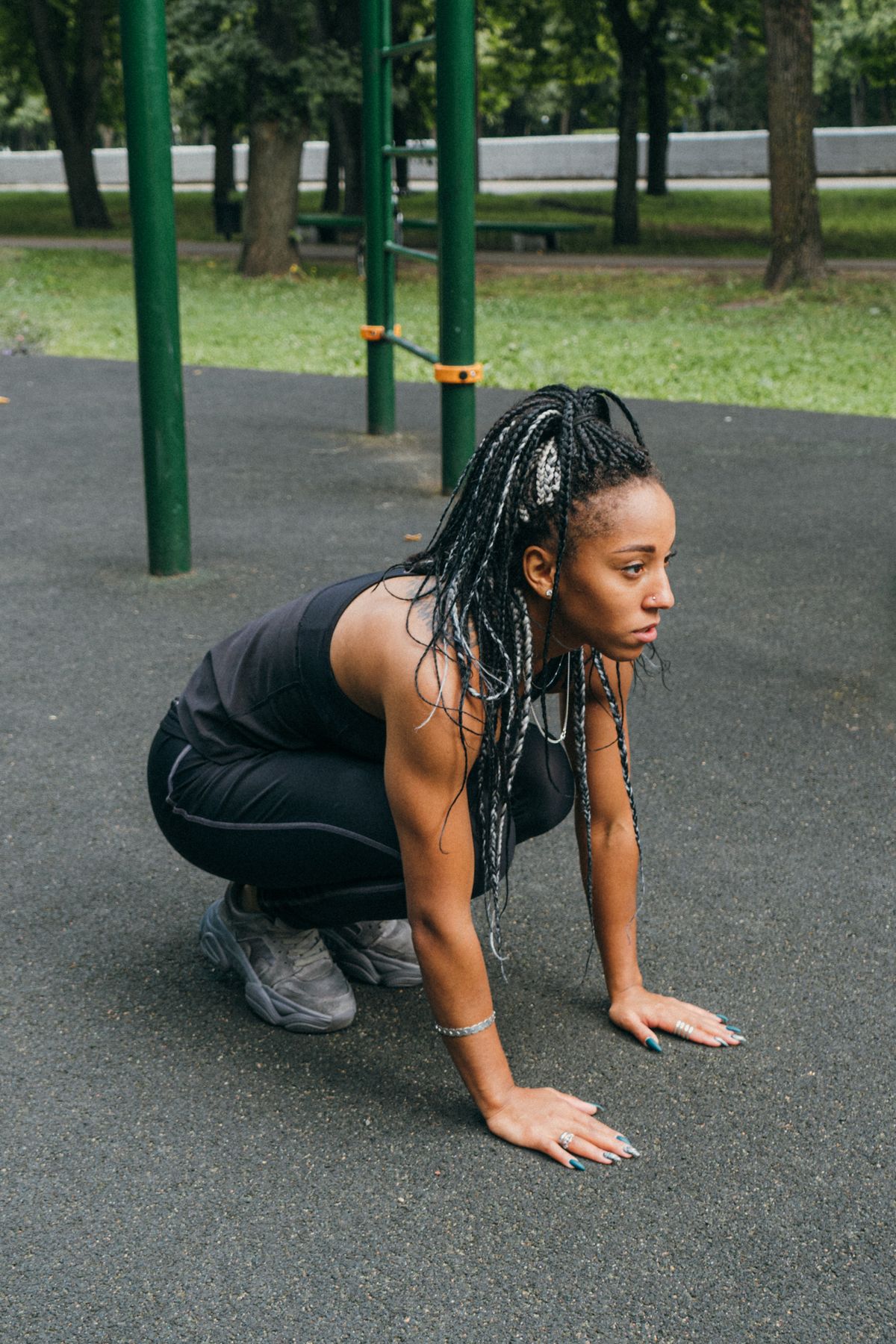
Photo by Antoni Shkraba via Pexels
Legs & glutes
No equipment
2-3 sets of 10-15
Feet shoulder-width apart, sit your hips back and down like you're lowering into a chair, keep your chest up, then push through your heels to stand. If balance is a concern, do these holding onto a countertop or sturdy chair back.
2. Push-Up (or Wall/Knee Push-Up)
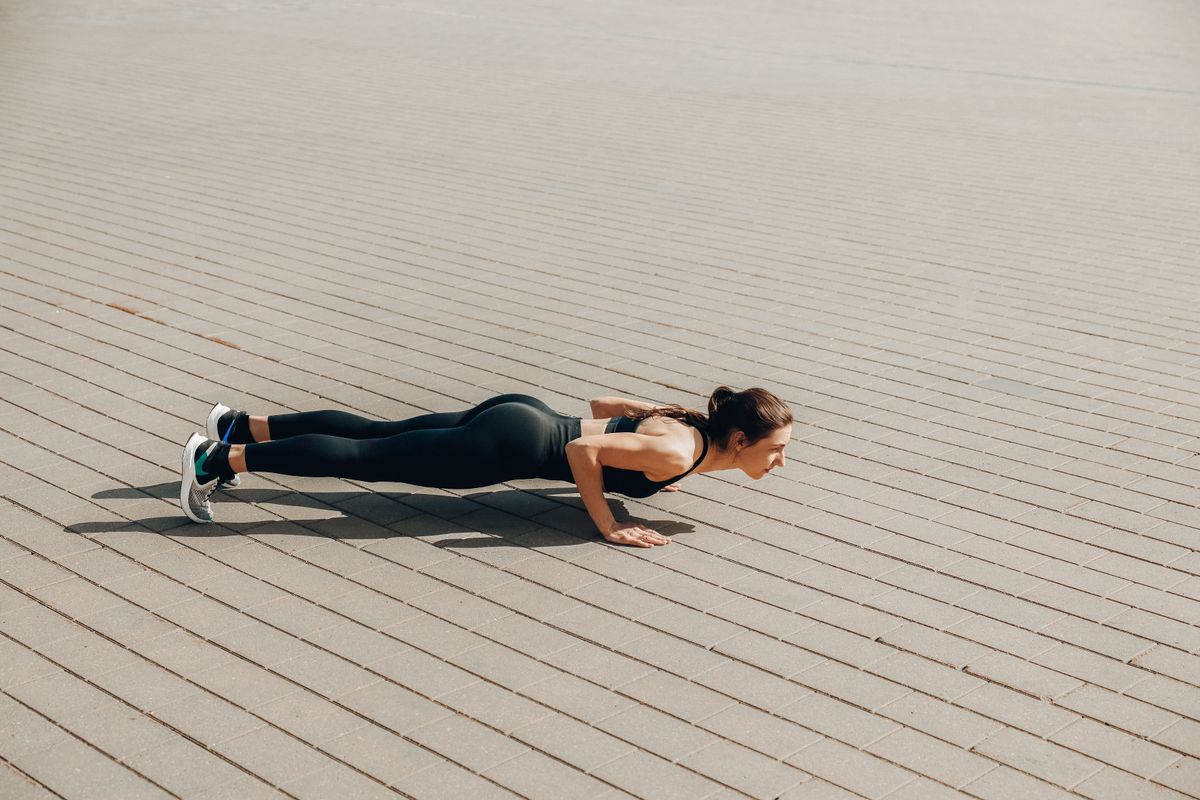
Photo by Maksim Goncharenok via Pexels
Chest, shoulders, arms
No equipment
2-3 sets of 8-12
Hands slightly wider than shoulders, body in a straight line, lower until your chest nears the floor, push back up. New to push-ups? Do them against a wall or countertop first, or drop to your knees — both are completely legitimate versions, not a "lesser" one.
3. Plank
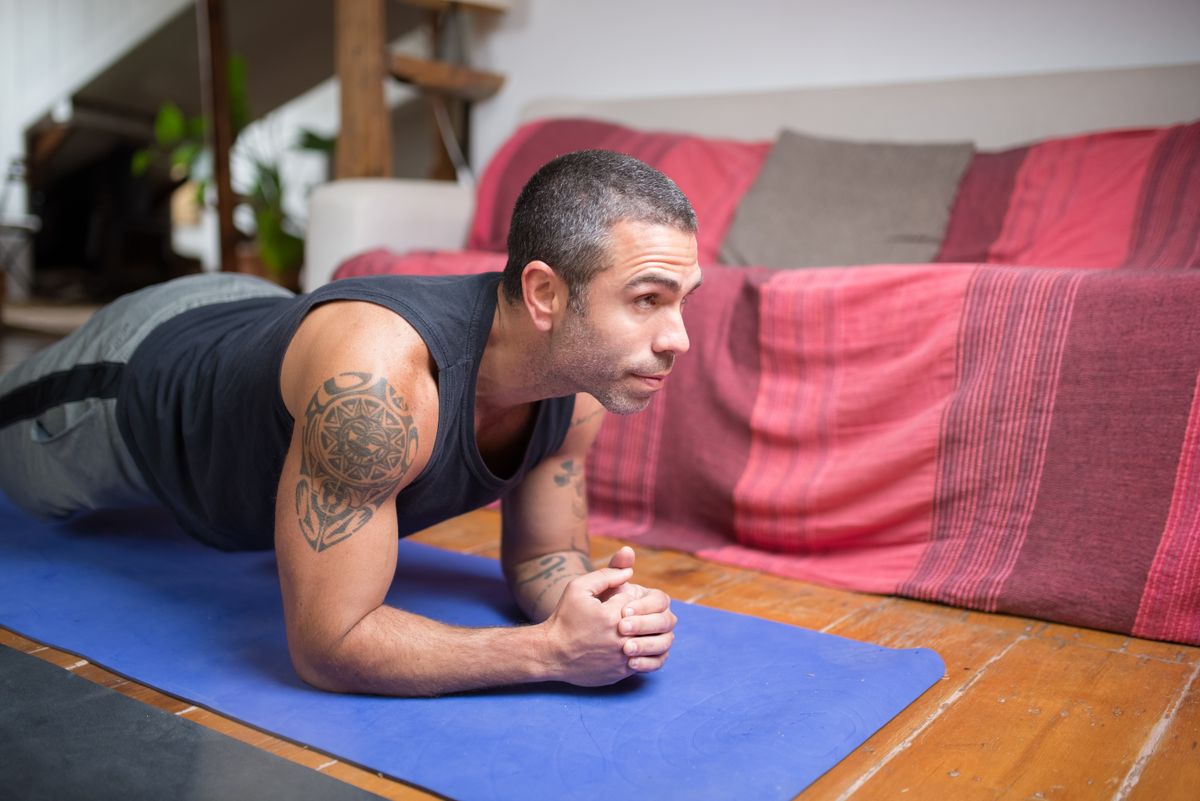
Photo by Kampus Production via Pexels
Core
No equipment
3 rounds, 20-30 sec
Forearms and toes on the ground, body in one straight line from head to heels, core braced like you're about to be poked in the stomach. Don't let your hips sag or pike up — shorter and correct beats longer and sagging every time.
4. Dumbbell (or Water Bottle) Row
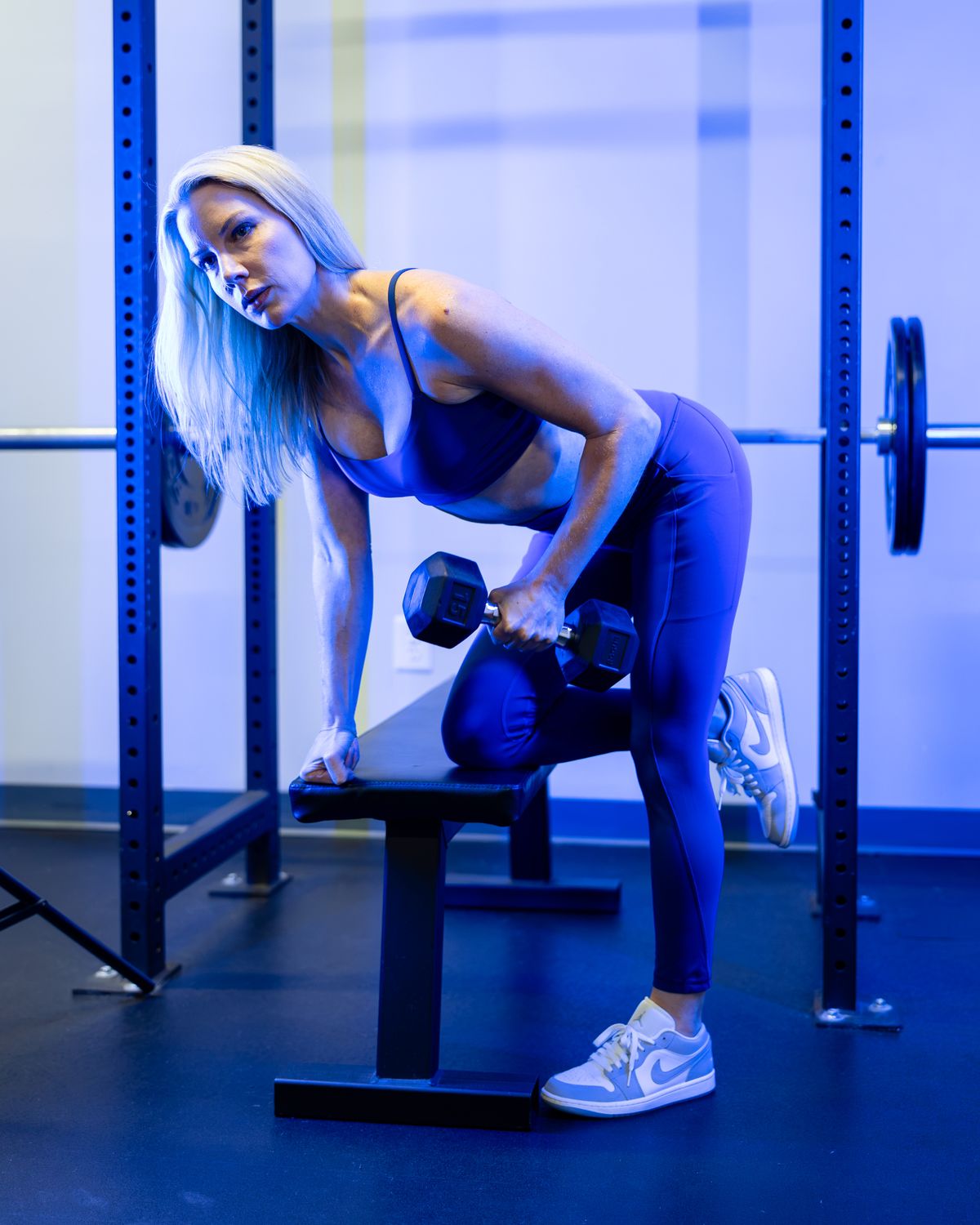
Photo by Luis Pelegrin via Pexels
Back & biceps
Light weight helpful
2-3 sets of 10-12/side
Hinge forward at the hips with a flat back, let one arm hang, then pull your elbow back past your ribs, squeezing your shoulder blade. No dumbbells yet? A full water bottle or a couple of soup cans work fine to start.
5. Walking Lunge
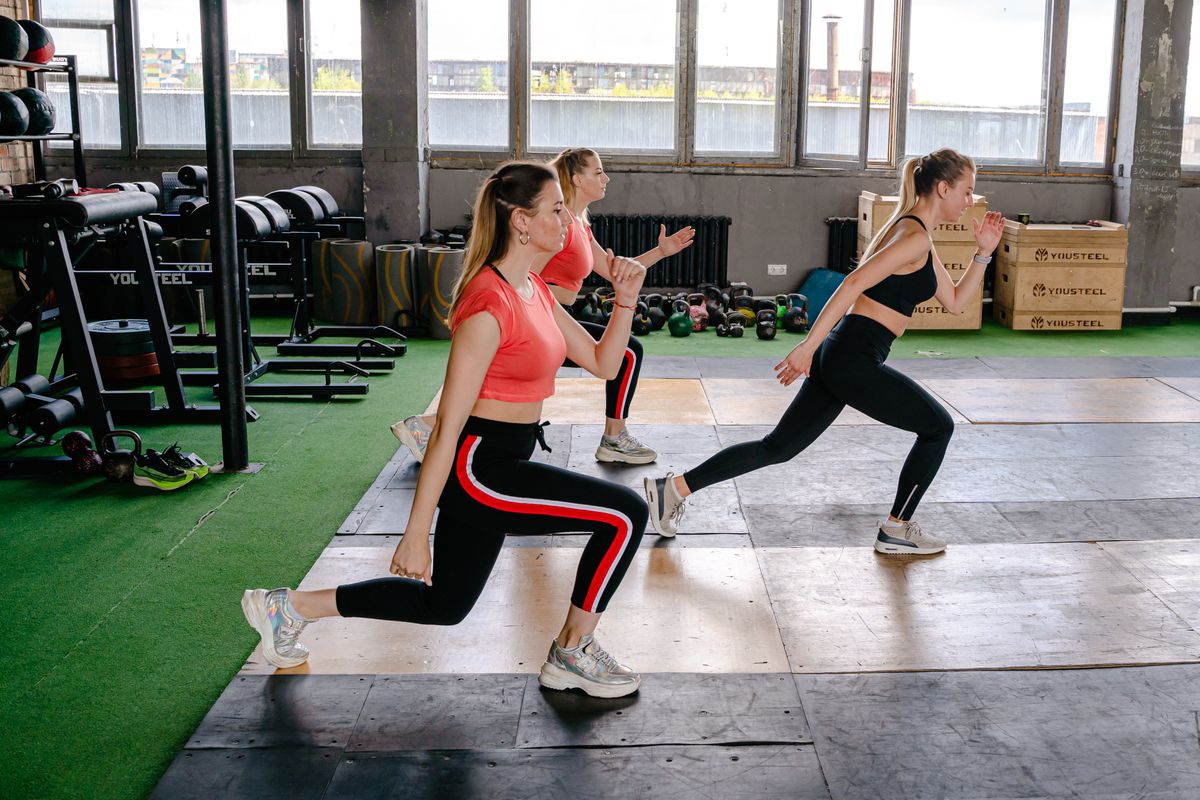
Photo by Antoni Shkraba via Pexels
Legs & balance
No equipment
2-3 sets of 8-10/leg
Step forward, lower your back knee toward the floor, then push off your front foot to bring your back leg through into the next step. Hold onto a wall for balance if needed — this one's a great one to do with a friend, honestly.
6. Glute Bridge
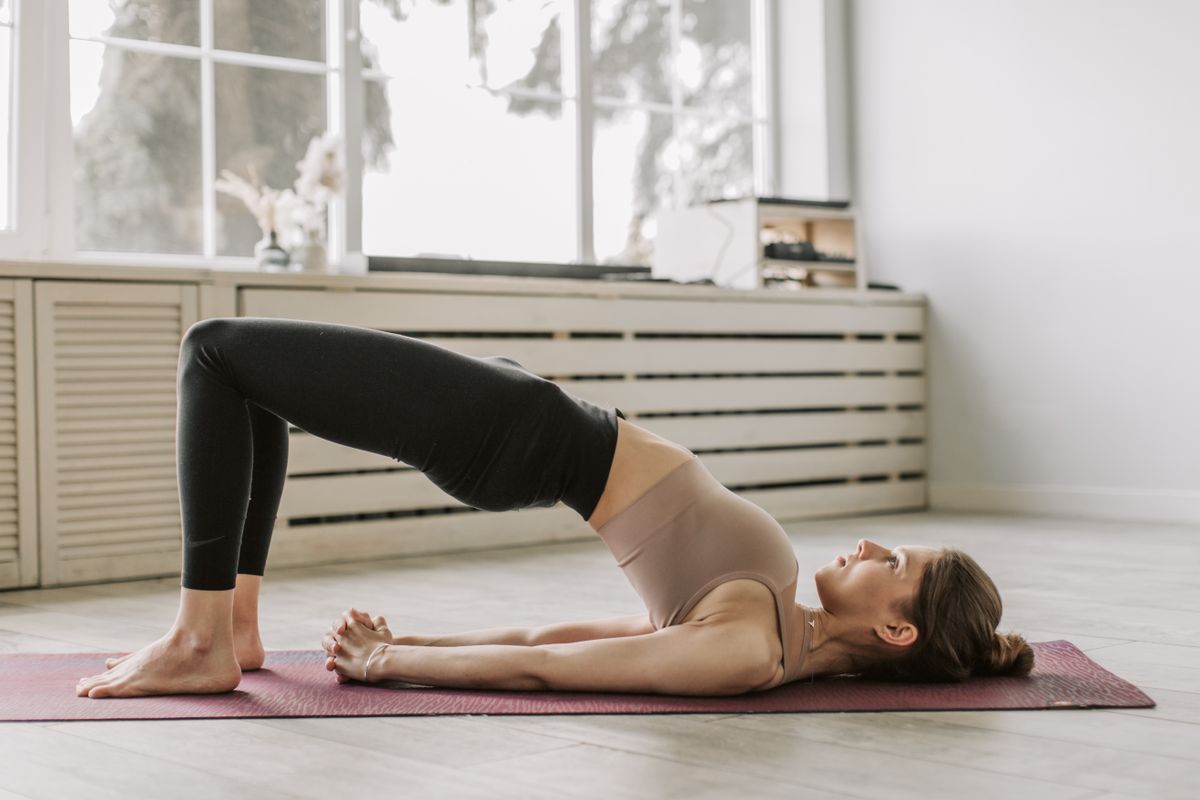
Photo by Vlada Karpovich via Pexels
Glutes & core
No equipment
2-3 sets of 12-15
Lie on your back, knees bent, feet flat on the floor. Squeeze your glutes to lift your hips until your body forms a straight line from shoulders to knees, then lower with control. Gentle on the joints, and a nice way to end a routine.
A simple way to put it together
Twice a week, run through all six moves as a circuit, resting briefly between each. That's it — you don't need a program more complicated than that to get real benefit, especially starting out. As it gets easier, add reps, a few pounds, or a third day.
Pair this with enough protein (use our protein calculator to get your target) and check in on your progress with the body fat calculator every few weeks — that combination is what tends to turn a stalled scale into visible, felt progress. Hungry for meal ideas that make hitting your protein number easier? See our high-protein, low-carb recipes.
Sources